







Retrieval-Augmented Generation

  • Home
  • Retrieval-Augmented Generation
image
image
image
image
image
image
image
image
image

Retrieval-Augmented Generation (RAG): Enhancing Chatbot Intelligence

With the rapid development of natural language processing (NLP), generative models have provided us with high-quality text generation capabilities. However, when it comes to domain-specific knowledge or complex contexts, traditional chatbots often struggle to provide accurate and relevant answers, leading to poor user experiences. Both businesses and users face numerous challenges in practical applications, including the following typical issues:

  • Inaccurate Responses Reduce User Trust: When dealing with specialized or complex queries, traditional chatbots often fail to provide highly accurate answers. This lack of precision undermines user trust in the system, affecting the user's willingness to continue using it in the long term.
  • Weak Context Understanding Diminishes Interaction Experience: When the chatbot cannot consistently understand the context of the conversation, responses often seem fragmented or irrelevant. This not only disrupts the coherence of the dialogue but may also confuse or frustrate users, negatively impacting the overall interaction experience.
  • Limited Knowledge Coverage Fails to Address Diverse Needs: Traditional generative models have limited performance when faced with queries requiring specialized knowledge, making it difficult to address the diverse needs of users and resulting in users not receiving the expected information or service.


image

How RAG Overcomes the Limitations of Traditional Chatbots

Traditional chatbots primarily rely on generative models, leading to limitations in several aspects:

  • Lack of Accuracy: Generative models typically depend on limited training data and cannot access external knowledge bases in real-time. As a result, the accuracy of generated content is often insufficient when addressing dynamic information or specialized domain queries.
  • Poor Contextual Relevance: Because conversational models cannot fully capture complex contextual information, the output often deviates from the user's actual needs, weakening the continuity and depth of the interaction.
  • Limited Knowledge Coverage: When faced with complex queries involving specialized knowledge, traditional generative models have limited capabilities and struggle to provide comprehensive answers, restricting their application in diverse scenarios.

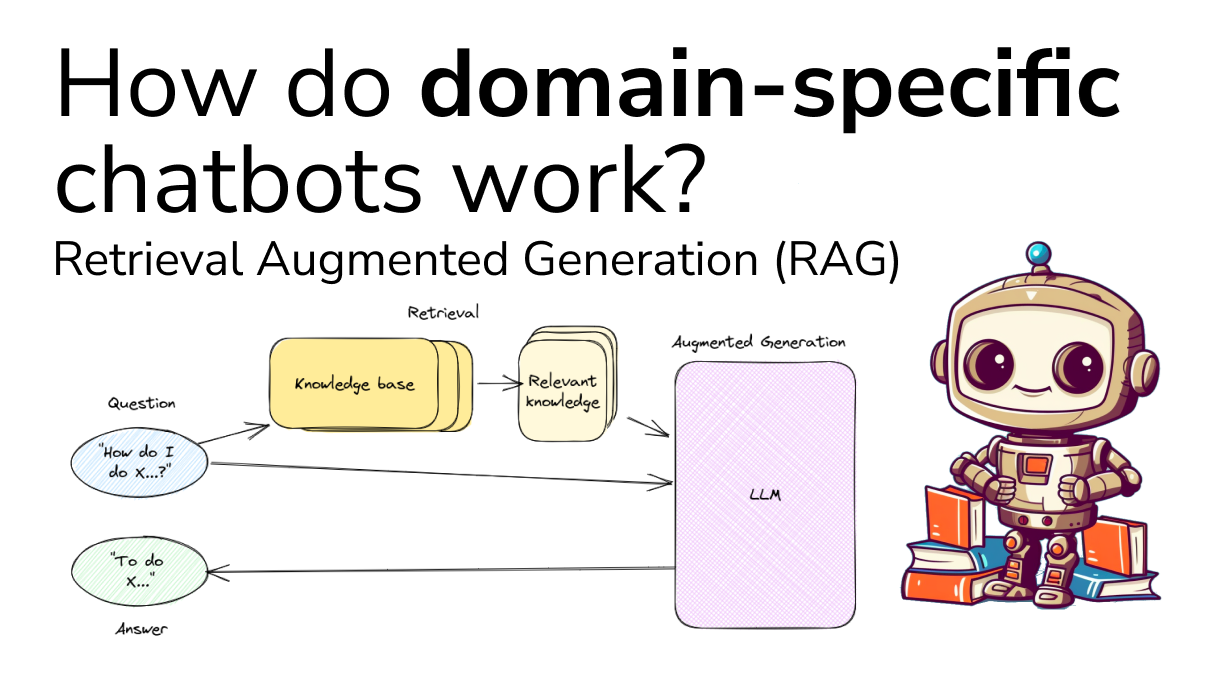
Retrieval-Augmented Generation (RAG) technology offers an innovative solution by combining the strengths of information retrieval and generative models. RAG not only improves the accuracy of generated content but also enhances the chatbot's contextual understanding and knowledge coverage, making it more intelligent and human-like in complex scenarios.

  • Retrieval Phase: When a user poses a question, the RAG system first retrieves the most relevant documents from a pre-built large-scale knowledge base. The system uses precise algorithms to quickly find content that is highly relevant to the user's query, providing strong contextual support for the generation phase.
  • Generation Phase: After retrieving the relevant documents, the generative model considers this information and generates more accurate and contextually relevant content, significantly improving the quality of generated content and avoiding common errors found in traditional models.


image

Practical Applications of RAG

The broad applicability of RAG technology demonstrates its strong potential in various fields:

  • Question-Answering Systems: In open-domain question-answering, RAG provides more precise and comprehensive answers by combining retrieval and generation, enhancing the user experience.
  • Professional Content Generation: In scenarios like news writing and academic reporting, RAG extracts information from relevant literature to generate more accurate and in-depth content.
  • Intelligent Customer Service and Virtual Assistants: RAG technology enables intelligent customer service systems and virtual assistants to generate more detailed and contextually relevant responses, significantly improving user satisfaction.
  • Customer Support: In customer support scenarios, RAG quickly retrieves knowledge base information, providing timely and accurate solutions to support staff, thus improving service efficiency and quality.
  • Real-time Knowledge Update and Application: RAG excels at handling dynamic information, capable of extracting updated information from the knowledge base to provide the latest answers.

Core Advantages of RAG

RAG technology brings significant improvements to chatbots:

  • Improved Generation Accuracy: By incorporating information from external retrieval, RAG significantly enhances the accuracy of generated content, especially in professional domain question-answering.
  • Enhanced Contextual Relevance: RAG ensures that generated content is highly consistent with user input in context by leveraging retrieved information, reducing the risk of generating incorrect information.
  • Expanded Knowledge Coverage: RAG can handle large-scale knowledge bases, making it suitable for complex queries requiring specialized knowledge, greatly enhancing the chatbot's knowledge coverage.


image

Future Development Directions

RAG technology has a promising future, with development directions including:

  • Integration with Complex Knowledge Graphs: Future RAG systems will more closely integrate complex knowledge graphs and structured data, enhancing the precision and depth of information retrieval and making generated content more professional.
  • Optimization of Retrieval Efficiency: As knowledge bases expand, optimizing retrieval algorithms will become key to ensuring the system remains efficient and accurate when processing vast amounts of data.
  • Multimodal Information Processing: Future RAG systems will integrate various data types such as text, images, and videos to generate richer and more diverse content, adapting to more complex and varied application scenarios.
  • Enhanced User Customization: Future RAG technology will support broader user customization, allowing users to adjust retrieval and generation strategies according to their needs, producing content that better meets personalized demands.
  • Improved Real-time Data Processing: With the increasing demand for real-time data, RAG systems will further enhance their ability to process dynamic data, providing more timely and responsive generated content.

Conclusion

Retrieval-Augmented Generation (RAG) technology has brought revolutionary breakthroughs to chatbots. By combining retrieval and generative models, RAG not only overcomes the limitations of traditional generative models but also greatly improves the accuracy, contextual relevance, and knowledge coverage of generated content. As technology continues to advance, the application of RAG in question-answering systems, content generation, intelligent customer service, and customer support will become more widespread, driving chatbots to become more intelligent and human-like, better meeting the diverse needs of users.